How many moving blankets does a moving truck need?

Owner, Kentuckiana Moving · Founder, Jonathan Richards Moving Supplies
7 min read
Quick answers
- Plan on at least one moving blanket per furniture piece, and two or three for large or fragile items.
- A studio apartment load takes about 12 to 15 pads, a two-bedroom home takes 36 to 48, and a large home takes 60 or more.
- Stock a 10-foot truck with about two dozen pads and a 26-foot truck with at least five dozen, then add spares for laundry and rotation.
- Order pads by the dozen and color-code them by truck so every set comes back to the right truck.
Most working trucks need somewhere between two dozen and five dozen moving blankets, depending on the truck’s size and the loads it usually carries. A 10-foot truck can run on about 24 pads, while a 26-foot truck calls for at least 60 before you count spares. The right number for your fleet comes from three counts: what each furniture piece needs, what a typical home takes, and what your biggest regular job looks like.
Start by counting pads per item
The most accurate way to build a blanket count is to walk the load and count pieces. Stellar Movers’ per-item guide assigns one blanket to a kitchen or dining chair, two to a small or medium dresser, two to a four-person dining table, and three to a large dresser or wardrobe. U-Haul’s blanket guide gives the same baseline: plan on at least one blanket per item, and expect large pieces like dining tables, headboards, and bookcases to need two or three for full coverage.
The per-item rule scales to any job because it follows the furniture rather than the floor plan. Heavier or more delicate pieces get two to three blankets while smaller pieces get one each. Resist stretching one pad across two items to make the count work: HireAHelper warns that the shortcut leaves edges bare and open to deep scratches. The stakes are real: a Better Business Bureau analysis of the moving industry, cited by Last Stop Moving, names furniture as the most commonly damaged item category, mentioned in 57% of damage complaints.
How many blankets a home usually takes
Consumer guides size blanket counts by home, and those numbers help movers as a translation layer: customers describe their home, and you plan the load. HireAHelper’s guide by home size:
| Home size | Blankets needed | What that usually covers |
|---|---|---|
| Studio apartment | 12–15 | A bed, a small dresser, a TV, and a few end tables |
| One-bedroom home | 18–24 | A full bedroom set plus a sofa, kitchen table, and chairs |
| Two-bedroom home | 36–48 | Two bedroom sets, living room furniture, and a washer and dryer |
| Three or more bedrooms | 60+ | Multiple large rooms, heavy appliances, and patio sets |
Other published counts land in the same range. Stellar Movers uses a flat ladder of 12 blankets per bedroom tier, from 12 for a studio up to 60 for a four-bedroom home, and Last Stop Moving estimates about 12 blankets per bedroom. HireAHelper’s own shorthand is roughly a dozen pads per furnished room.
Two adjustments are worth making on real jobs. HireAHelper suggests adding a dozen pads when the move involves tight hallways or steep stairs, because the extras protect walls and door frames. And homes with glass, antiques, or oversized pieces need a per-item count on top of any room-based estimate.
Match the count to the truck size
The truck itself is the other common yardstick. Stellar Movers’ truck-size guidance puts about 24 blankets on a small 10-foot truck, comparable to a studio apartment load, and at least 60 on a 26-foot truck carrying a three-bedroom-plus household. Last Stop Moving offers a different rule: plan for one blanket per 5 square feet of moving truck space.
For a working company, the truck count matters more than the home count, because the pads live on the truck. Stock for the largest load the truck regularly carries, not the average one. Blankets also do a second job inside the load: U-Haul recommends folding pads into gaps between items so nothing shifts in transit, and Last Stop Moving suggests lining truck walls and floors and placing pads between stacked layers. A truck stocked only to its bare wrapping minimum has nothing left for gap filling, wall lining, or the second layer a fragile piece needs.
Stock spares for laundry and rotation
Pads get dirty on working trucks. HireAHelper cautions that a damp or dusty pad can stain an upholstered sofa, so crews should start each job with clean, dry blankets. Last Stop Moving’s care guidance is to spot clean where possible, air-dry wet pads to prevent mold, and avoid machine washing when you can, because washing can weaken stitching and cause shrinking.
Clean-pad requirements mean the working set on the truck is smaller than the set you own. Some pads will always be drying, waiting for a wash, or retired with torn binding. Build that rotation into the order instead of discovering it mid-job.
Worked example: from truck count to order size
Here is a worked example with hypothetical inputs; swap in your own truck count, truck size, and spare policy. Say a company runs two 26-foot box trucks. Using the truck-size guidance above, each truck carries 60 working pads, or 5 dozen. Add 2 dozen spares per truck for laundry rotation and damaged pads, and each truck needs 7 dozen:
- Working stock: 2 trucks × 5 dozen = 10 dozen (120 pads)
- Rotation spares: 2 trucks × 2 dozen = 4 dozen (48 pads)
- Total: 14 dozen (168 pads)
At Jonathan Richards Moving Supplies’ listed prices, 14 dozen polyester pads at $100 per dozen totals $1,400. The same order in cotton at $85 per dozen runs $1,190. A mixed order of 10 dozen polyester for everyday work and 4 dozen cotton for finished-furniture jobs lands at $1,340.
Orders of 20 or more bundles qualify for volume discounts, so a three-truck order, or one that adds shop spares, is worth asking about.
Give every truck its own color
Once pads rotate between trucks, they wander. A colored pad set solves the sorting problem: assign each truck, crew, route, or service line its own color, and pads come back to the right vehicle at the end of the day. The visual count is fast: if the red pads are short in the stack, someone sees it before the truck leaves.
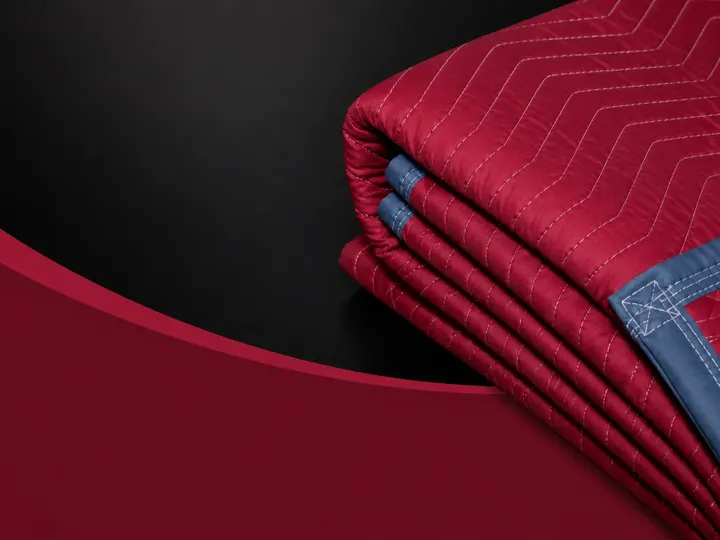
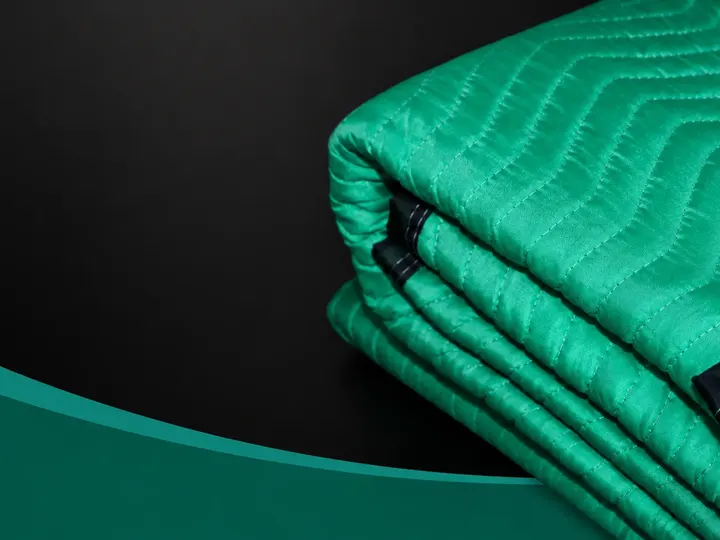
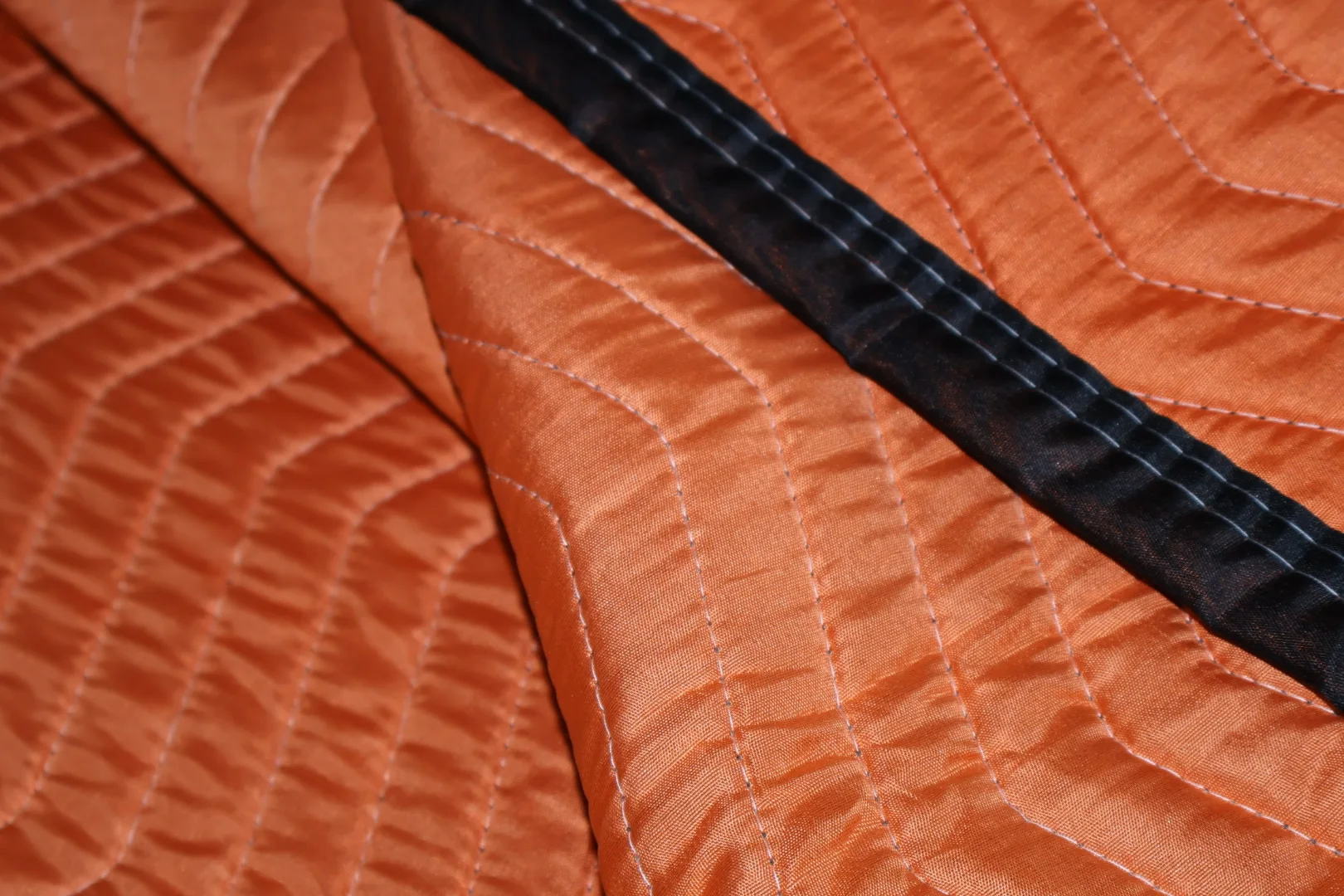
Jonathan Richards Moving Supplies sells polyester moving pads in black, yellow, red, green, orange, and pink, and cotton pads in baby blue, green, and red. Colored pads can also match your brand colors, so crews look consistent on every job.
Choose the pad material for the job
Once the count is settled, the next choice is material. Polyester is the everyday truck pad: it sheds less, handles moisture better, and cleans up easier when the same pads work job after job. Cotton drapes softer and grabs corners better, so it earns its place on finished furniture, nicer homes, and pieces customers watch closely. Our polyester vs cotton guide walks through the tradeoffs, and the moving blanket sizes and weights guide explains what weight per dozen tells you about a pad.
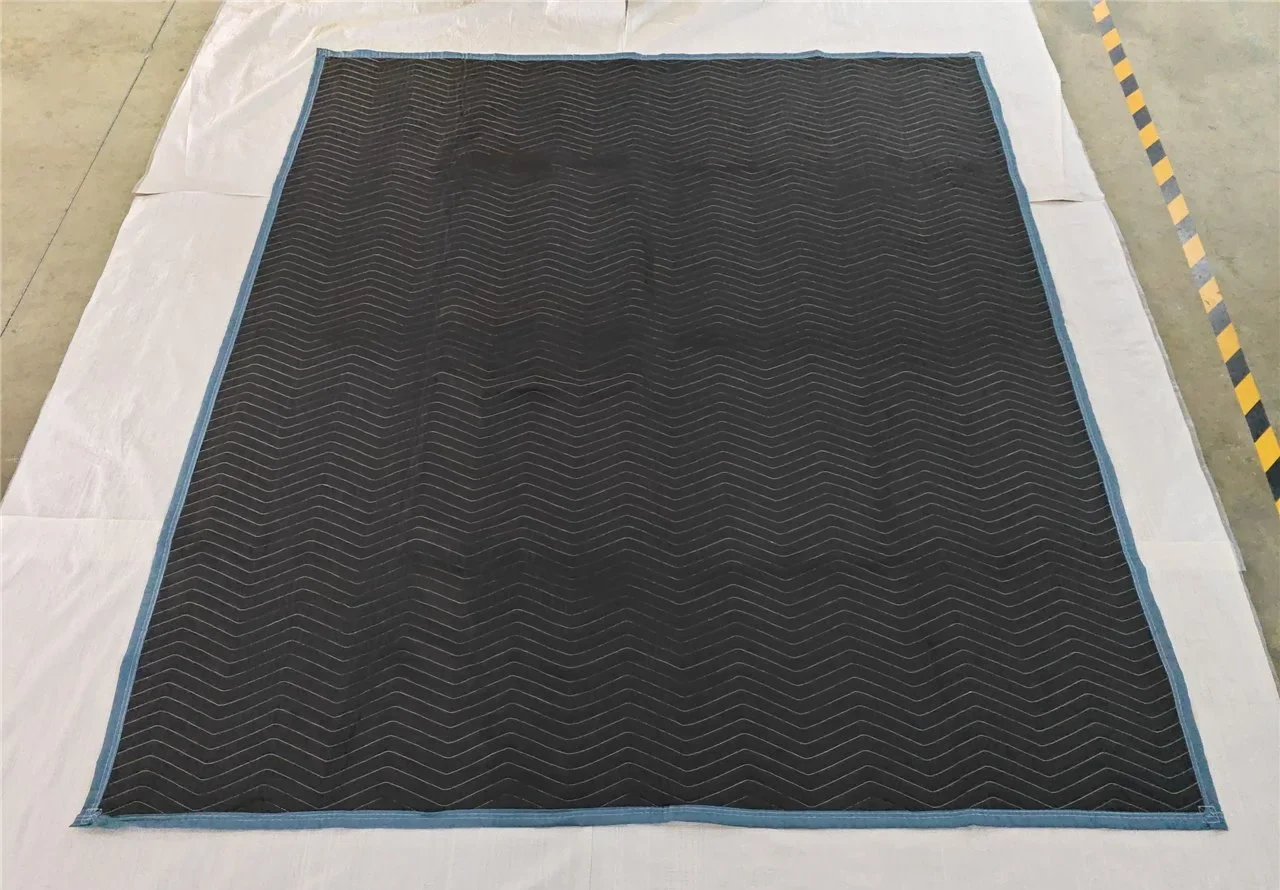
For reference, our super premium polyester line weighs 85 lb per dozen at 72 x 80 inches. Last Stop Moving’s published weight tiers run from 54 to 64 lb per dozen for lightweight blankets up to 83 to 93 lb per dozen for heavy-duty stock, so an 85 lb dozen sits inside the heavy-duty range.
Use the pads you stock
A pad only works if it stays in place. The wrapping method is consistent across the major guides: drape the blanket over the top of the piece so it hangs evenly, cover corners and edges all the way to the floor, then secure it with stretch wrap. U-Haul and Stellar Movers both recommend stretch wrap over tape, which leaves a sticky residue, and HireAHelper adds that tape applied directly to wood or fabric can cause permanent damage. In the truck, load heavy wrapped pieces low, keep lighter ones on top, and fill gaps with folded pads so the load rides as one mass.
Ordering pads for your fleet
Jonathan Richards Moving Supplies stocks polyester and cotton pads by the dozen, with volume discounts on orders of 20 or more bundles. Pickup is available in Louisville, Kentucky by appointment, and Jon delivers orders on his own moving trucks when a route lines up.
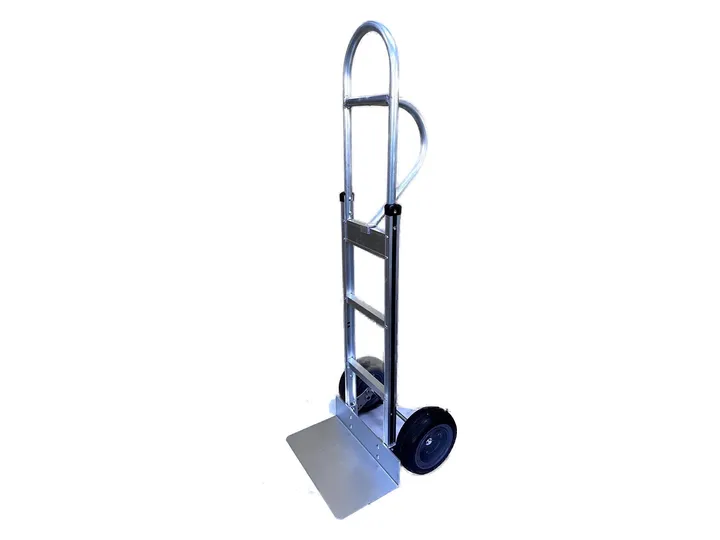
Order pads by the dozen from the polyester and cotton collections, or use Build your mix to ask about a custom color pairing for a truck or crew. If the trucks need more than pads, the 60-inch aluminum hand truck is rated at 500 lb capacity, priced at $165 each plus shipping, and includes a free 52-inch handle.
Sources
- Stellar Movers: How Many Moving Blankets Do I Need? — per-item, per-bedroom, and per-truck-size blanket counts.
- HireAHelper: Why You Really Need Moving Blankets and Where to Get Them — per-home ranges, a dozen pads per furnished room, and clean-pad and wrapping guidance.
- U-Haul: Moving Blankets 101: A Complete Guide — per-item baseline, pad types, and using folded pads to fill truck gaps.
- Last Stop Moving: How to Properly Use Moving Blankets — per-bedroom and per-square-foot estimates, blanket weight tiers, care guidance, and the BBB damage-complaint figure.